
How AI Will Change Food Photography for CPG Creative Teams
Every month, another AI tool drops. Every quarter, another trend shapes how brands create, test, and ship content. And if you work with food photography, you know this space is changing faster than anything we’ve seen in years.
So let’s talk about where this is heading and what it means for food photography in the next five years.
AI Isn’t Replacing Photographers
Let’s get this part out of the way. Even though AI photo tools are speeding up content creation, they’re not replacing the need for real product photography, especially for CPG brands. You still need an actual bottle of hot sauce. A matcha tin. A snack bar with real texture. You still need the right surface, the right lighting, and the right human touch to make a product feel craveable.
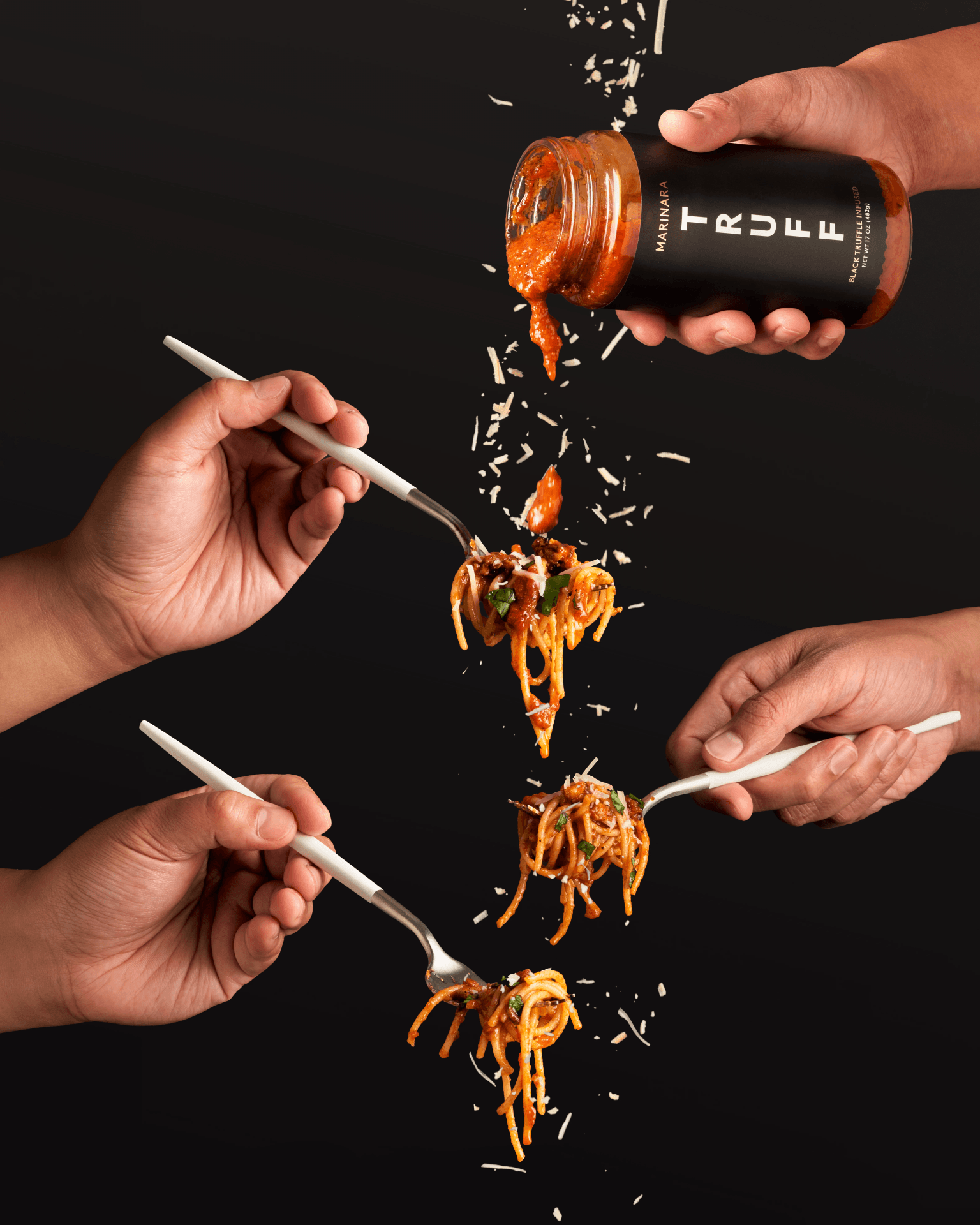
I’ve worked with teams at Truff, Elmhurst 1925, and Jade Leaf, and one thing stays true across every project. Brands want visuals that feel real. They want food images that show texture, steam, and personality.
But AI Is Changing How We Work
Now here’s where things get interesting. Right now, AI images are improving at an unbelievable speed. According to a report, 92% of businesses plan to invest in generative AI tools within the next 3 years, and more than 70% of marketers already use some form of AI in their production workflow.
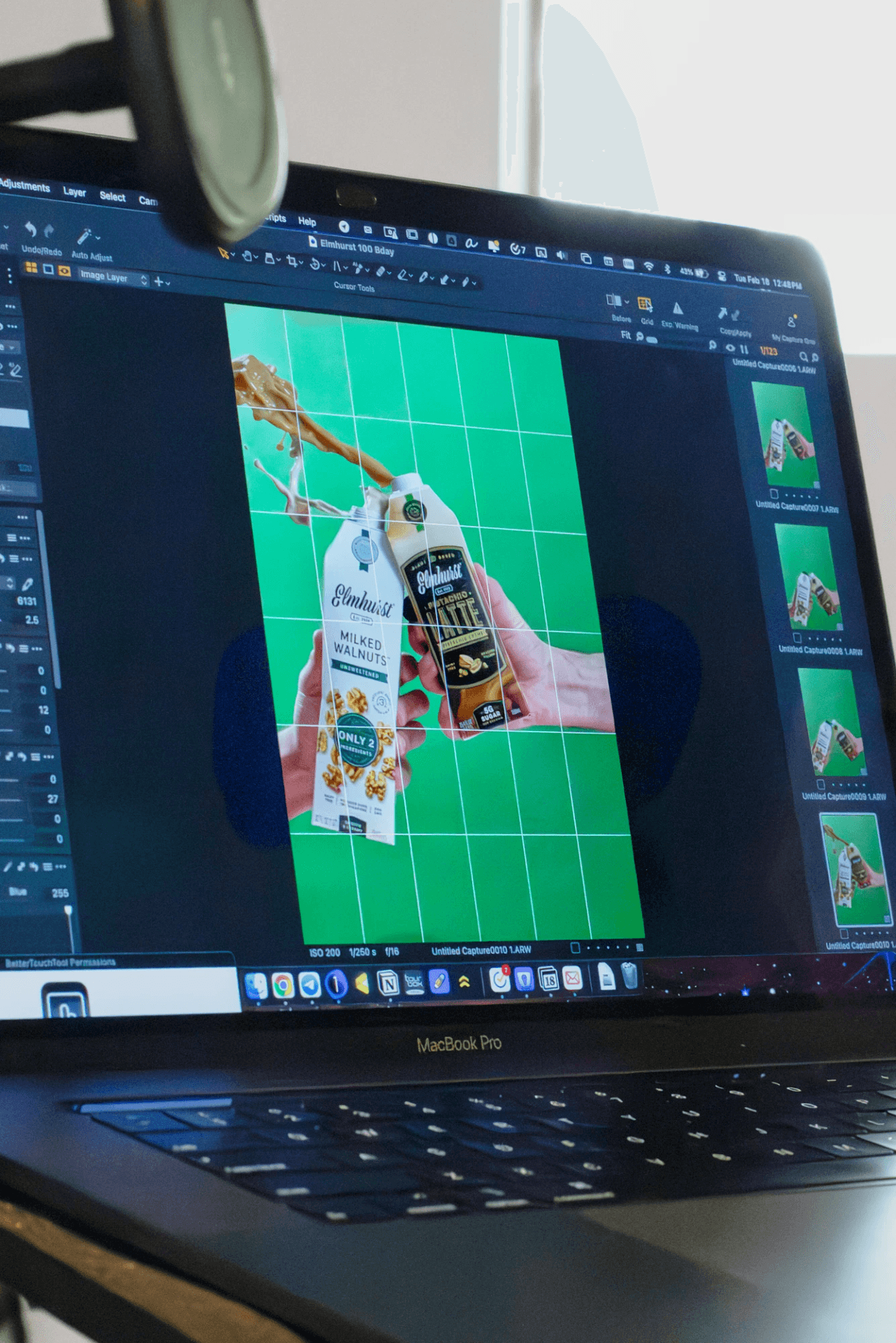
To be honest, AI is becoming a huge part of my creative process behind the scenes. I use tools like ChatGPT, Photoshop’s AI features, and even Google Gemini to help with pre-production and photo editing. Sometimes I’ll generate a rough sample image during planning so the client can see what I’m imagining. It helps everyone align quicker. When I’m editing, AI cleanup tools can speed up retouching, but I still fine-tune everything by hand so it keeps that natural look.
And buyers know the difference, especially when shopping online. AI isn’t perfect yet. Sometimes it fills a background weird or produces a texture that’s slightly off. That’s when I jump in with traditional tools and fix it myself. But overall, it cuts my editing time enough that I can take on more projects and deliver faster.
What This Means For CPG Creative Teams
Even though real-world production still matters, AI is transforming how CPG creative teams plan, budget, and execute food photography. Here are the biggest shifts happening right now.
1. Faster pre-production
Moodboards, early concepts, and shot previews that used to take days now take minutes. AI can generate rough ideas that help teams align before stepping into a photography studio. It speeds up decision-making so everyone walks into the product shoot already on the same page. And this means shoots run smoother, and costs often go down.
2. Streamlined photo editing
AI-assisted image editing tools are becoming incredibly reliable. Adobe Firefly, for example, has been used to generate more than 13 billion images. Retouching that used to take hours now takes a fraction of the time.
3. More room for creative storytelling
As repetitive tasks get faster, creative teams get time back. And that opens the door for more storytelling through product video and short-form content that builds brand identity. This is especially important since, according to research, shoppers say rich media influences whether they buy from a brand online. The demand for content is growing, and AI helps teams keep up with that pace.
4. Higher expectations for authenticity
As AI-generated images flood the internet, real professional food photography becomes even more valuable. You can tell when a burger isn't real. You can tell when a chocolate drizzle has that uncanny valley shine. This is where photography with food, real textures, and human-led styling will set brands apart.
5. A hybrid workflow is the new normal
In five years, almost every CPG team will blend AI and real photography. This hybrid approach is already happening for national CPG brands, and smaller brands are adopting it quickly.
AI And The Future Of Food Photography
As AI grows, creative teams who understand both real-world production and AI tools will stand out. The CPG brands that win will be the ones that use AI to support better ideas, faster workflow, and stronger brand imagery.
And for anyone worried, here’s the truth. Food photography doesn’t lose value because AI exists. It becomes more valuable. Because the real thing always looks better.
If you want help planning your next product shoot or exploring a hybrid workflow, I’d love to connect.
