How AI Predicts High-Converting Food Photos for CPG Shoppers

If you’ve ever wondered why some food photos stop you mid-scroll while others get ignored, AI is finally giving us some answers. CPG brands want visuals that convert, and shoppers want images that feel appetizing, clear, and trustworthy. The cool part is that AI can now study thousands of food images online and predict which styles, angles, and details influence buyer decisions.
I’ve been watching this shift closely, and it’s opening the door for smarter content planning and stronger ecommerce product photography. Here’s how AI breaks it down.
AI Spots What Makes Certain Food Photos Convert
One of the biggest perks is the way AI sorts patterns we don’t normally catch. AI models scan huge sets of food images from ecommerce sites and social platforms. As the system compares them against performance data, it starts connecting patterns we usually miss. Things like:
Which angles lead to more clicks
How color contrast affects appetite appeal
What level of shine, texture, or steam feels more “real” to shoppers
Whether the packaging is clear enough to build trust
How close-up shots influence purchase intent
There’s a study that shows how sensory cues in images boost the desire to taste or buy a product. AI leans heavily on this kind of data because it can detect those cues far more consistently than the human eye.
When the system sees a food photo that performs well, it learns why. When it sees one flop, it logs that too. Over time, these patterns turn into insights that CPG brands can use to shape their visual strategy.
AI Helps CPG Brands Build Smarter Shotlists

Instead of guessing what shoppers want, it gives brands real direction. Based on category, audience behavior, and ecommerce trends, AI can recommend:
Angle shoppers trust most
The level of realism expected in product photos
Props that help or distract
Whether a product video or a stop motion clip would outperform a still photo
How many product photos does the listing actually need
This is especially helpful for food and beverage brands competing in visually crowded categories. Think sauces like Truff, plant-based drinks like Elmhurst 1925, or treats like SkinnyDipped. Strong visuals matter, and AI helps point you toward the ones shoppers already respond to.
This step alone helps me build stronger shotlists, especially for ecommerce product shoots where lighting, texture, and packaging photography need to stay consistent.
Predicting High-Converting Elements Before the Shoot
Here’s where it gets interesting. Instead of waiting to test images after a product shoot, AI can predict performance before you even set up the lights.
AI tools evaluate visual elements such as:
Texture clarity
Lighting style
Composition choices
Color combinations
Packaging visibility
By comparing these elements to previous high-performing food images, AI provides a solid prediction of how a new photo will land.
AI tools help me pinpoint those cues before I even touch a camera. When I’m planning photography with food items, I use AI-generated mockups to see what angles and textures stand out. It gives clients a visual preview of my ideas so they’re not guessing what’s in my head.
AI Supports the Human Touch, It Doesn’t Replace It
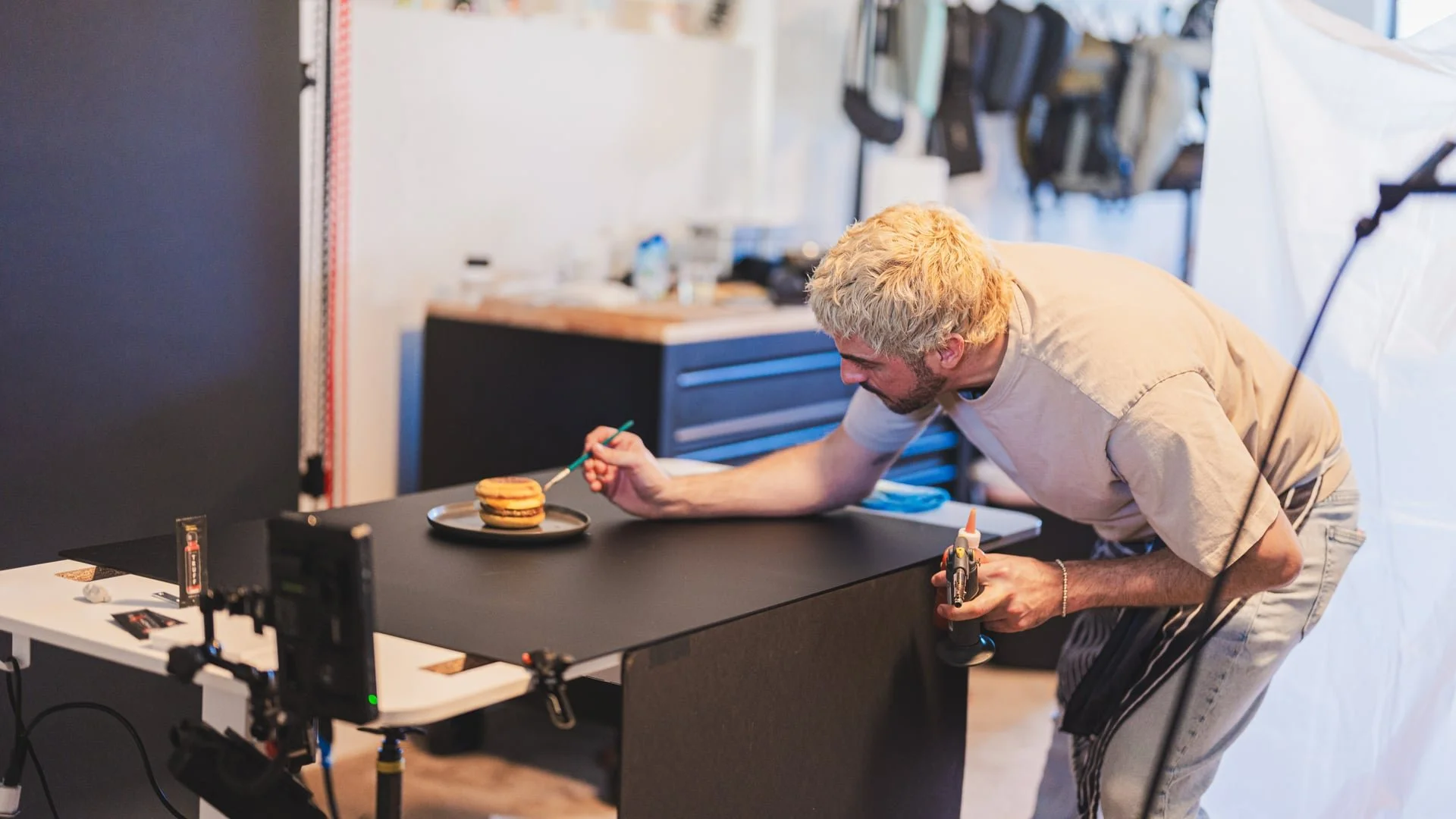
AI can’t plate dumplings, adjust garnish, capture melting chocolate in motion, or lead a product shoot with a full team on set. It can’t replicate the collaboration that happens with stylists, founders, and marketing teams during shoots like Starbucks x Truff or Zipfizz.
What AI can do is help me prep smarter and deliver edits faster. And when CPG brands need quick turnarounds, that matters. It frees up my time so I can take on more projects and give every brand the attention it deserves.
AI Makes Food Photos Smarter and More Predictive
AI is changing how CPG brands approach food photography, not by replacing creativity, but by predicting what will convert before a single test shot is taken. When you combine human taste with AI insights, you get food photos that speak directly to shopper behavior.
The craft stays human. The boost comes from tech. And together, they create high-converting visuals your audience will trust.
Ready to plan your next shoot? Let’s talk.